
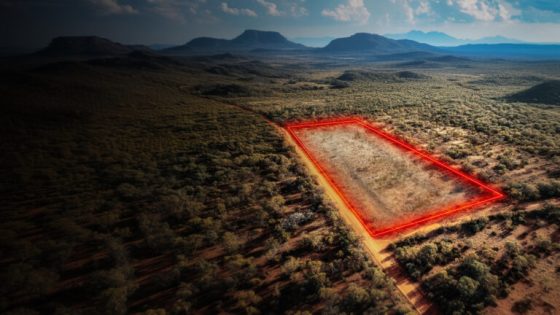
Brazil has recorded an important environmental milestone: for the first time in recent years, deforestation fell below one million hectares in 2025. According to new data released by [MapBiomas](https://brasil.mapbiomas.org/en/?utm_source=chatgpt.com), the country lost approximately 985,000 hectares of native vegetation last year — a reduction of more than 20% compared to 2024.
For many environmental groups, scientists and indigenous communities, this represents a significant sign of hope. Brazil is home to much of the Amazon rainforest, one of the planet’s most vital ecosystems. The Amazon absorbs enormous amounts of carbon dioxide, regulates rainfall patterns across South America and sustains extraordinary biodiversity.
The reduction in deforestation suggests that stronger environmental monitoring, renewed political commitment and greater international attention may be beginning to make a difference. President Luiz Inácio Lula da Silva has repeatedly pledged to achieve “zero deforestation” by 2030, and the latest figures indicate movement in that direction.
Yet the report also serves as a warning against complacency.
Even with the decrease, nearly one million hectares of forest and native vegetation were still destroyed in a single year. Environmental destruction continues to threaten ecosystems, indigenous territories and the global climate. Fires, illegal mining, logging, cattle ranching and agricultural expansion remain major pressures on the Amazon and other Brazilian biomes such as the Cerrado.
Scientists continue to warn that the Amazon is approaching a dangerous “tipping point,” beyond which large parts of the rainforest could become irreversibly degraded. Over the past four decades, Brazil’s Amazon region has already lost an area of forest larger than Spain.
The story of Brazil’s forests is therefore both encouraging and urgent. Progress is possible. Policies matter. International cooperation matters. Local communities matter. But protecting creation requires perseverance and a long-term vision that places people and the planet above short-term economic interests.
Brazil’s latest figures offer a reminder that environmental recovery is achievable when governments, civil society and local communities work together. However, the challenge goes beyond statistics. Care for creation is also about relationships: with the earth, with future generations and with those communities already suffering the consequences of climate change and environmental destruction. The reduction in deforestation is good news. The task now is to ensure that it becomes not an exception, but the beginning of a lasting transformation.
Sources
[1]: https://timesofindia.indiatimes.com/world/rest-of-world/brazils-amazon-deforestation-falls-to-six-year-low-yet-destruction-persists/articleshow/131341137.cms?utm_source=chatgpt.com “Brazil’s Amazon deforestation falls to six-year low, yet destruction persists”
[2]: https://www.climatepolicyinitiative.org/publication/the-forest-climate-nexus-for-the-brazilian-amazon/?utm_source=chatgpt.com “The Forest-Climate Nexus for the Brazilian Amazon”
[3]: https://phys.org/news/2025-08-amazon-lost-area-larger-spain.html?utm_source=chatgpt.com “The Amazon has lost an area larger than Spain in 40 years, report shows”
[4]: https://www.wwf.de/fileadmin/user_upload/Technical_brief_%E2%80%93_Amazon_Deforestation__1__compressed__1___1_.pdf?utm_source=chatgpt.com “Drivers of Amazon deforestation in agricultural supply chains”
[5]: https://phys.org/news/2025-09-brazil-amazon-lost-area-size.html?utm_source=chatgpt.com “Brazil’s Amazon lost area the size of Spain in 40 years: Study”