
Climate change isn’t just an environmental or economic challenge — it’s also a moral and cultural one that touches deeply on how people make sense of their world. That’s the central insight of a new London School of Economics article exploring why religion deserves a seat at the climate table, especially in contexts like the Middle East, where lived experience, language and faith are tightly interwoven.
The piece, “Why is religion important when talking about climate change?” highlights how climate narratives common in the Global North — like “carbon footprints” or technical policy frameworks — often feel remote or irrelevant to many communities across the world. Instead, people interpret extreme weather, drought, floods, and heat through meaning-making frameworks rooted in everyday life — including religion and moral narrative.
For many in Egypt and Jordan, these climate experiences aren’t just abstract scientific problems — they carry moral and spiritual significance that shape how people talk about the climate crisis, understand responsibility, and imagine collective action.
https://www.lse.ac.uk/research/research-for-the-world/sustainability/religion-climate-change-middle-east
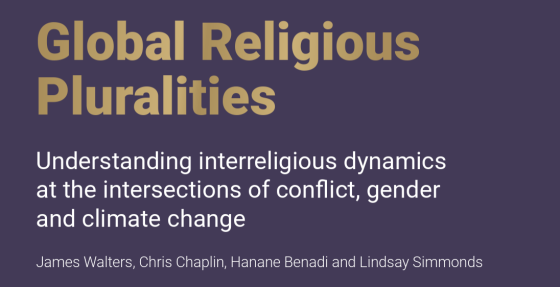
Explore Further: Global Religious Pluralities Report
To read more about this kind of work, have a look at the Global Religious Pluralities project — an interdisciplinary research initiative by LSE’s Religion and Global Society Unit that looks at the intersections of religious diversity, conflict, gender, and climate change.
The Global Religious Pluralities summary report offers insights into questions such as:
- How do religious worldviews shape climate understandings and responses?
- In what ways do women of faith contribute uniquely to peacebuilding and climate engagement?
- How can interreligious spaces and leadership foster collective approaches to shared global challenges?
This work shows that climate change isn’t a purely secular phenomenon — it intersects with people’s beliefs, identities, and moral frameworks, requiring us to expand beyond technical solutions to include cultural and interfaith engagement.
chrome-extension://efaidnbmnnnibpcajpcglclefindmkaj/https://www.lse.ac.uk/rgs/assets/Global-Religious-Pluralities-Summary-Report-July-2024.pdf