
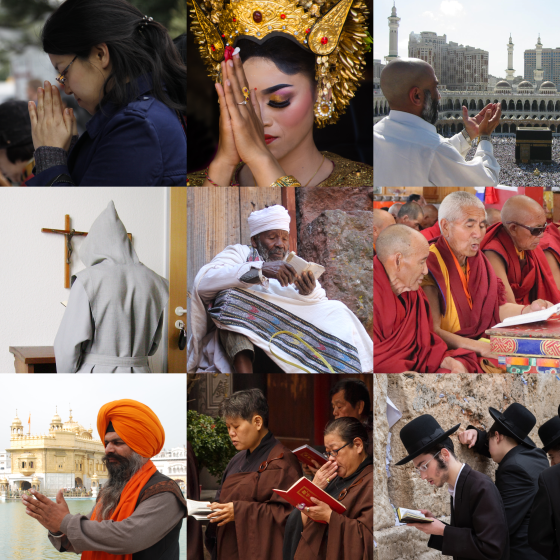
This year, Lent and Ramadan once again unfold side by side — a powerful reminder that different faith traditions often walk similar spiritual paths at the same time. For Christians and Muslims alike, these sacred seasons invite believers to slow down, rediscover what truly matters, and renew relationships with God, neighbour, and creation.
At a moment marked by climate crisis, inequality, and conflict, these parallel journeys offer more than personal renewal. They open a space for dialogue and shared action — showing how faith communities together can become a force for peace and care for the earth.
A Season of Listening and Conversion
In his 2026 Lenten message, Pope Leo XIV describes Lent as a time of listening and fasting, calling believers to place God again at the centre of life and to learn to hear both the Word of God and “the cry of those who suffer.” Fasting, he explains, is not simply abstaining from food but a path toward justice, humility, and a more sober way of living. It should even extend to disarming our language, replacing harmful words with words of hope and peace.
This emphasis on listening resonates deeply with today’s global challenges. True conversion involves not only personal change but also renewed relationships — learning to hear the poor, the excluded, and even the wounded earth itself.
“How Much Is Enough?”
The World Council of Churches has taken this further by launching a Global Systemic Carbon Fast during Lent 2026. The initiative asks Christians worldwide to reflect on how patterns of extraction, overconsumption, and inequality drive climate breakdown. Each week focuses on industries such as fossil fuels, industrial agriculture, or mining, encouraging both spiritual reflection and concrete action.
At its heart lies a simple but challenging question: How much is enough?
The campaign connects the ancient prayer “Give us today our daily bread” with modern ecological responsibility, reminding believers that the pursuit of endless accumulation harms both people and planet.
Ramadan: Fasting with Compassion and Justice
During Ramadan, Muslims around the world also embrace fasting from dawn to sunset — a practice rooted in self-discipline, gratitude, and compassion. Fasting helps believers grow in awareness of those who experience hunger daily and encourages generosity, charity, and reconciliation.
Messages marking Ramadan this year highlight unity, mercy, and service to society. The Irish Muslim Council describes the holy month as a time to strengthen community bonds, deepen spirituality, and renew commitment to compassion and justice.
In the UK, the Muslim Council of Britain’s “Hungry for Change” campaign explicitly links Ramadan fasting with social and environmental responsibility. The initiative encourages Muslims to reflect on food waste, ethical consumption, and the global inequalities that leave many without enough to eat — connecting spiritual discipline with practical action for a fairer and more sustainable world.
Shared Values Across Faiths
When viewed together, Lent and Ramadan reveal striking common themes:
Fasting as freedom — stepping back from excess to rediscover what sustains life.
Listening and compassion — becoming attentive to the suffering of others.
Justice and generosity — responding to inequality through concrete action.
Community renewal — strengthening relationships and dialogue.
Care for creation — recognising that spiritual renewal includes ecological responsibility.
Both traditions teach that hunger can become a teacher. By experiencing limits voluntarily, believers rediscover dependence on God and solidarity with those who live with involuntary scarcity every day.
Dialogue for Climate Action and Peace
In a divided world, the overlap of Lent and Ramadan becomes an opportunity for encounter rather than comparison. Shared meals at sunset, interfaith conversations, joint climate initiatives, and local acts of service can transform fasting into a bridge between communities.
Faith traditions bring something unique to climate action: moral imagination. They remind society that environmental crises are not only technical problems but spiritual ones — rooted in how humanity understands enough, gratitude, and responsibility.
When Christians and Muslims fast at the same time, they witness together that another way of living is possible: one marked by restraint rather than excess, solidarity rather than division, and hope rather than fear.
A Shared Journey Toward Hope
Perhaps the deepest message of these overlapping seasons is simple. Peace with the earth begins with peace in the human heart. And peace among peoples begins when we learn to listen — to God, to one another, and to the cry of creation.
As Lent and Ramadan unfold together this year, they invite all of us — believers and people of goodwill alike — to rediscover that spiritual renewal and care for our common home are inseparable journeys.
Fasting, in both traditions, ultimately points toward the same horizon: a more just, peaceful, and sustainable world where there is truly enough for everyone.