
On 17 January 2026, Christians from across traditions and communities gathered at the Canal Court Hotel, Newry, for the Let Justice Flow Like Rivers Creation Care Conference, a significant ecumenical moment of prayer, learning and shared commitment in response to the ecological crisis, with particular attention to the pollution of Lough Neagh.
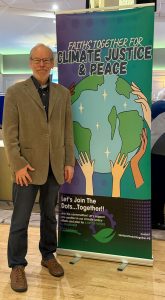 Members of the Join the Dots Together (JTDT) steering group were very glad to attend. It was an encouraging opportunity to reconnect with many colleagues and collaborators, and to meet new partners whose work is shaping faith based responses to climate and biodiversity loss. Conversations throughout the day sparked fresh ideas and renewed energy, including emerging possibilities for collaboration during the forthcoming Season of Creation
 The Season of Creation is an annual Christian observance that takes place from September 1st to October 4th. It is a time when Christians around the world come together to pray, reflect, and take action on caring for the environment and addressing ecological concerns. The observance begins on the World Day of Prayer for the Care of Creation (September 1st) and concludes on the feast day of St. Francis of Assisi (October 4), the patron saint of ecology in the Catholic tradition. The Season encourages prayer, education, and advocacy for environmental stewardship. Read more about the Season of Creation » More.
The conference was organised by Ireland’s Church Leaders’ Group, the Irish Council of Churches and the Irish Inter-Church Meeting, and brought together church leaders, theologians, scientists, community groups and policymakers.
A central biblical and theological framing was offered by Dr Hilary Marlow, who reminded participants that the Bible is the story of God and God’s world, and that the prophetic cry for justice — echoed in the conference title — cannot be separated from care for the earth. Her reflection challenged churches to recognise environmental justice as integral to Christian discipleship, not an optional add-on.
Scientific and social realities were addressed by Dr Jim McAdam, who spoke about the serious ecological pressures facing Lough Neagh, highlighting the cumulative impact of nutrient pollution, land use practices and climate change. His contribution underlined the urgency of evidence-based, collaborative solutions rooted in care for land, water and communities.
Global and cultural perspectives were brought by Prof. Gail Heffner, who emphasised that ecological healing requires honesty, humility and reconciliation — with one another and with creation itself. She stressed that Christians are called to face environmental brokenness with both moral clarity and hope.
The day was grounded in prayer, led by Archbishop Eamon Martin, Catholic Primate of All Ireland, Archbishop John McDowell, Church of Ireland Archbishop of Armagh, Bishop Sarah Groves, President of ICC and otehrs who reflected on the deep connection between justice, faith and the care of creation.
Andrew Muir MLA, Northern Ireland Minister for Agriculture, Environment and Rural Affairs also attended. His presence signalled the importance of dialogue between faith communities, civil society and public decision-makers in addressing environmental challenges, particularly those affecting shared natural resources.
The afternoon session was a riveting succession of practical experiences from a range of Church commmunities and congregations.
- Eco Congregation Ireland, outlining how churches are engaging spiritually, practically, locally and globally in care for creation.
- The Moravian Church, reflecting on Creation Care in the context of a minority church with historic buildings and limited resources.
- Methodist Centenary Church, Dublin, sharing volunteer-led sustainability initiatives and lessons learned from long-term commitment.
- The Archdiocese of Dublin, presenting its Energy Masterplan, including data-driven approaches to reducing emissions, energy costs and land use impacts.
A notable strength of the conference was the strong contribution of local groups and grassroots initiatives, whose information stands and displays added depth and practical witness to the day. As well as Christian AId and Trocaire, these included:
- Save Our Sperrins, drawing attention to the protection of local landscapes and communities;
- The Westcourt Centre, whose Our Common Home photo exhibition offered a powerful visual reflection on the beauty, fragility and sacredness of creation;
- The Fossil Fuel Non-Proliferation Treaty
 The Fossil Fuel Non-Proliferation Treaty is a proposed international treaty aimed at phasing out fossil fuel production to mitigate climate change. The initiative calls for a global agreement similar to treaties on nuclear weapons, with three main goals: ending the expansion of fossil fuel production, facilitating a fair transition away from existing fossil fuel use, and ensuring support for workers and communities impacted by the transition. The idea is to prevent further environmental harm by stopping new fossil fuel projects and transitioning towards clean energy sources in an equitable and just manner.
• Read about the Fossil Fuel Non-Proliferation Treaty Initiative »
More Campaign highlighting the moral case for a just transition away from fossil fuels;
For Join the Dots Together, the conference was a hopeful sign of what is possible when churches, communities and campaigns come together — listening deeply, sharing wisdom and committing to action. The gathering in Newry affirmed that justice for people and justice for the earth must flow together, like rivers, sustained by faith, collaboration and hope.